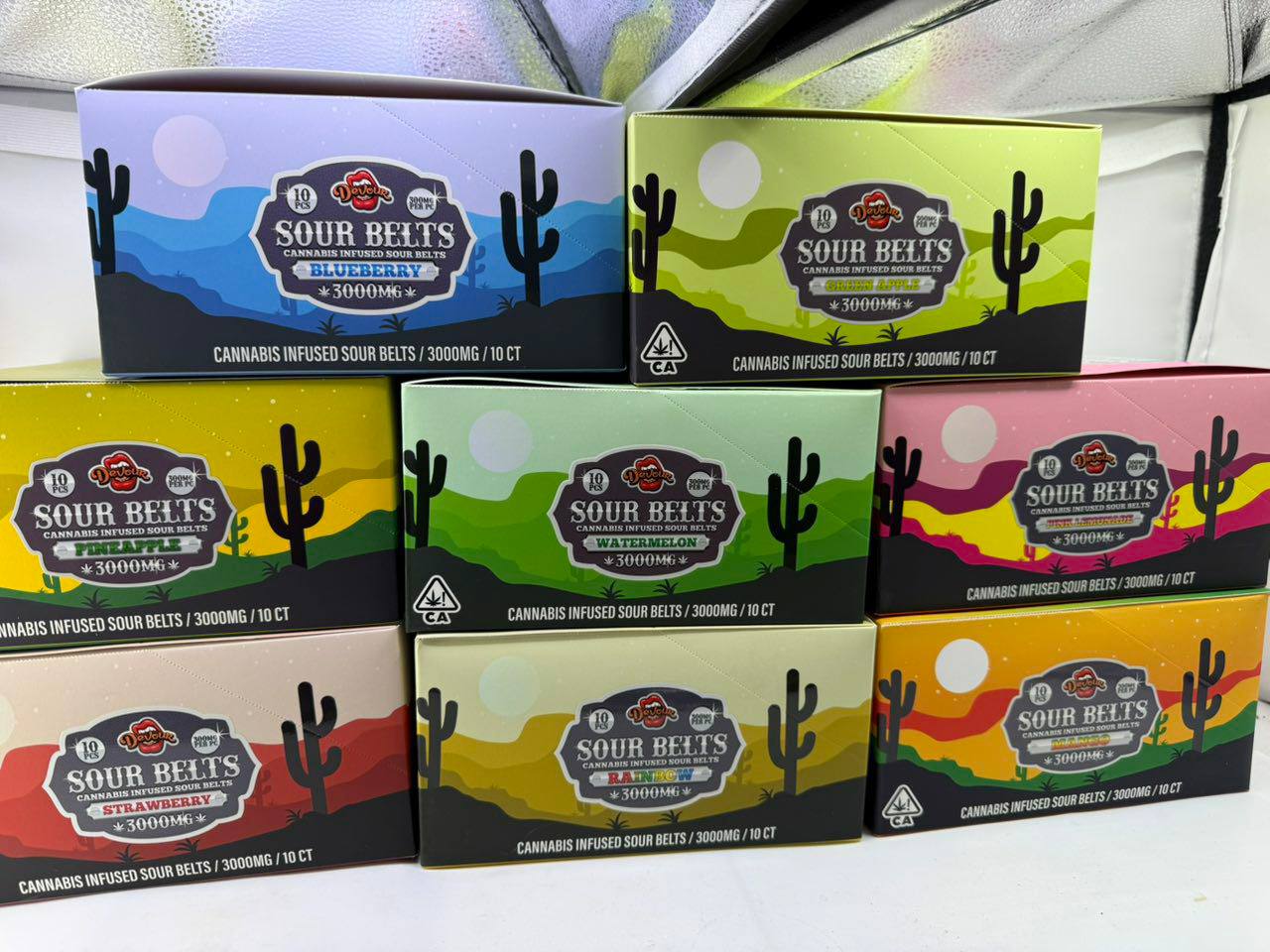
Devours Sours Belts 3000MG: Product Information and Usage Overview
Devours Sours Belts 3000MG is an infused edible product presented in sour belt candy form. The product is typically packaged for adult consumers in jurisdictions where cannabinoid-infused items are permitted under local regulations. In addition, the sour belt format offers a familiar texture and flavor profile that many consumers recognize from traditional confectionery products.
The formulation contains a labeled total cannabinoid content of 3000MG per package. Because potency levels may vary between batches and manufacturers, users are encouraged to review packaging details carefully before consumption. Furthermore, laboratory testing information may provide additional insight into cannabinoid concentration, ingredient composition, and product consistency.
The texture of sour belts is generally soft, chewy, and coated with a sweet-and-tart sugar layer. As a result, the flavor profile often combines fruit-inspired notes with a tangy finish. Depending on the variety, flavor options may include berry blends, citrus profiles, tropical combinations, or mixed fruit selections.
Edible products are commonly stored in sealed packaging to help maintain freshness and preserve texture. Moreover, proper storage conditions may reduce exposure to heat, moisture, and direct sunlight. Many consumers choose cool and dry storage spaces because environmental conditions can influence product quality over time.
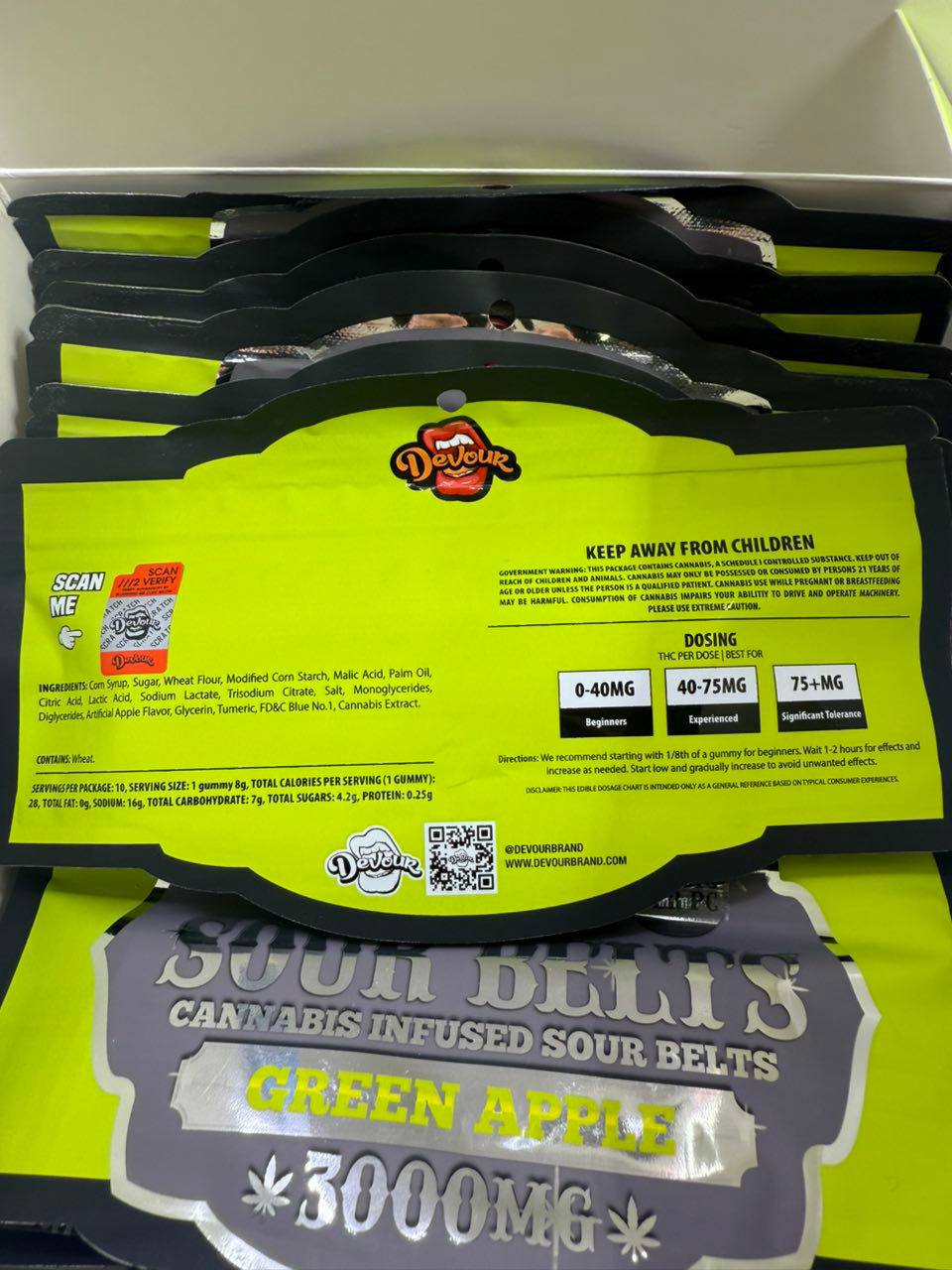
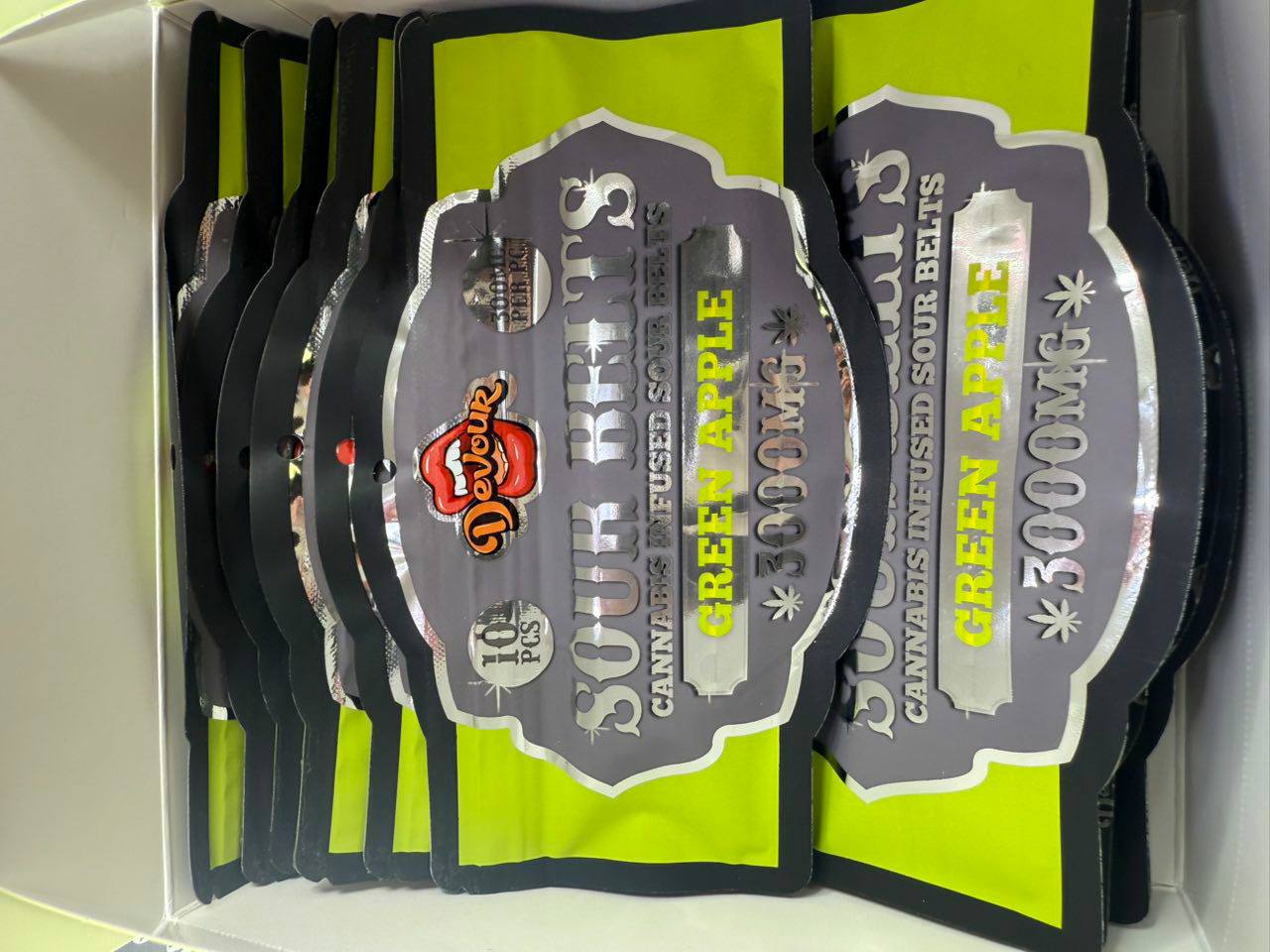
Packaging for infused edibles frequently includes serving guidance, ingredient information, batch identification, and compliance labeling. In many regulated markets, child-resistant packaging standards are also required. Consequently, manufacturers may use resealable containers or protective wrappers designed to support safety practices.
Consumers often review ingredient lists before selecting edible products. Ingredients may include sweeteners, flavoring agents, gelatin or pectin, coloring components, and cannabinoid extracts. Additionally, allergen statements may appear on packaging where applicable. Individuals with dietary restrictions are therefore encouraged to examine ingredient disclosures carefully.
Edible cannabinoid products are metabolized differently from inhaled products. As a result, onset time may vary depending on metabolism, serving size, food intake, and individual tolerance levels. Many public health sources recommend cautious serving practices for new consumers because effects may take longer to appear compared with inhaled formats.
Product appearance can differ between manufacturers and production batches. Some sour belts feature sugar-coated surfaces with layered coloring, while others present softer textures and lighter coatings. Similarly, flavor intensity and tartness levels may vary depending on formulation methods.
Lab testing has become an important aspect of many regulated cannabinoid markets. Third-party testing may evaluate potency, contaminants, residual solvents, pesticides, or microbial content. Therefore, consumers often review certificates of analysis when assessing product transparency and manufacturing standards.
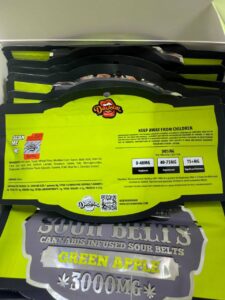
Brand presentation frequently emphasizes packaging design and flavor identity. However, regulations in some regions may restrict advertising language, imagery, or health-related claims associated with cannabinoid products. Consequently, compliant labeling practices remain important for manufacturers and retailers operating within regulated frameworks.
Shelf life may depend on ingredient stability, packaging integrity, and storage conditions. For this reason, expiration dates or best-by recommendations are commonly displayed on product labels. Consumers often monitor these dates to maintain freshness and product consistency.
The edible category has expanded significantly in recent years. In addition, sour belt products have become one of several candy-inspired formats available within adult-use and hemp-derived markets. Gummies, chocolates, beverages, baked items, and chewable candies are also commonly found across regulated product categories.
Responsible storage practices are strongly encouraged for all infused edible products. Products should remain inaccessible to children and pets because candy-style appearance may create confusion with non-infused snacks. Therefore, sealed and clearly labeled storage remains important in households where multiple individuals are present.
Local laws regarding cannabinoid products differ widely between jurisdictions. As a result, consumers are encouraged to review regional regulations before purchasing, transporting, or using infused products. Age restrictions, possession limits, and labeling standards may vary substantially depending on applicable legislation.

This informational overview is intended for general educational purposes only and does not promote or encourage misuse of cannabinoid products. Consumers should review local laws, manufacturer guidance, and product labeling before use. Understanding potency labeling is important when reviewing infused edible products such as sour belts. The “3000MG” figure typically refers to the total cannabinoid content in the entire package rather than a single serving. Therefore, the distribution of that total across individual pieces may vary depending on how the manufacturer portions the product. In regulated markets, serving sizes are often standardized to help consumers make more informed decisions.
Variability in effects can occur across individuals due to several biological and situational factors. For instance, body composition, prior exposure to cannabinoids, metabolism rate, and recent food intake may all influence how an edible product is processed. Consequently, two individuals consuming the same product may experience different intensities or durations of effects.
Onset time for edible products is generally delayed compared to inhaled alternatives. This delay occurs because cannabinoids are processed through the digestive system before entering the bloodstream. As a result, effects may not become noticeable for a period of time after consumption. This delayed onset is one reason why regulated health guidance often emphasizes patience and caution with edible products.
Duration of effects can also be longer with edibles compared to other consumption methods. The digestive metabolism pathway processes compounds gradually, which may extend the overall timeframe of effects. Because of this, users in regulated environments are often advised to plan accordingly and avoid combining use with activities requiring full attention.
Ingredient transparency plays a significant role in consumer awareness. Many edible products include additional components such as gelatin alternatives, plant-based pectin, sugar coatings, flavor extracts, and food coloring agents. These ingredients contribute to texture, taste, and shelf stability. In addition, some formulations may be vegan-friendly or allergen-conscious depending on production standards.
Manufacturing processes for infused confectionery products typically involve infusion of cannabinoid extracts into a base mixture before shaping and coating. Quality control procedures may include batch testing and consistency checks to help maintain uniform distribution of active compounds. However, variations can still occur between production runs depending on equipment calibration and ingredient sourcing.
Packaging design in this category often serves both protective and regulatory functions. Child-resistant closures, tamper-evident seals, and clear labeling are commonly used to meet compliance requirements in regulated markets. Furthermore, packaging may include warning statements, ingredient lists, and storage instructions to support consumer safety awareness.
Storage conditions can influence product stability over time. Exposure to heat or humidity may affect texture, causing sour belts to become sticky or lose structural integrity. Therefore, controlled environments are generally recommended to help preserve quality. Keeping products in sealed containers may also reduce exposure to air and environmental contaminants.
Legal frameworks surrounding cannabinoid-infused edibles differ widely across regions. Some jurisdictions permit regulated sale and consumption, while others restrict or prohibit such products entirely. Because of these differences, compliance with local laws is essential when considering purchase or possession.
From a consumer education perspective, understanding labeling conventions is essential. Terms such as “total cannabinoids,” “per serving,” and “per package” may carry different meanings depending on regulatory definitions. Misinterpretation of labeling can lead to unintended consumption levels, which is why clear reading of packaging information is encouraged.
Quality assurance practices in regulated markets may involve third-party laboratory testing. These tests can assess potency accuracy and screen for contaminants such as heavy metals, pesticides, and residual solvents. When available, certificates of analysis provide additional transparency regarding product composition and safety standards.
The edible confectionery category continues to evolve, with sour belts representing one of many formats developed to resemble traditional candy products. This resemblance has contributed to both popularity and regulatory attention, particularly regarding packaging visibility and youth access prevention.
Responsible handling of infused edible products is emphasized across most regulated frameworks. Because these items may resemble non-infused candy, careful storage practices are important in shared environments. Secure placement and clear separation from regular food items may reduce the risk of accidental ingestion.
Consumer awareness also includes understanding tolerance development. Regular exposure to cannabinoids may lead to changes in individual response over time. As a result, experienced users and new users may exhibit different sensitivity levels even when consuming similar products.
Education surrounding cannabinoid products often focuses on moderation, informed decision-making, and regulatory compliance. These principles are intended to support safe consumption practices within legal frameworks. They also help reduce risks associated with misunderstanding potency or delayed onset effects.
If you want, I can continue further with additional sections such as:
- manufacturing standards in more detail
- legal status breakdown by region
- ingredient science and formulation methods
- comparison of edible formats (gummies vs belts vs chocolates)
- consumer safety and labeling guide template
Just tell me which direction you want the next part to go.
Regulatory compliance remains one of the most important aspects of cannabinoid-infused edible products. In many regulated markets, manufacturers are required to follow strict guidelines regarding production, labeling, and distribution. These guidelines are designed to ensure product consistency and consumer safety. Furthermore, compliance systems may include licensing requirements, facility inspections, and documentation of production batches.
In addition, testing standards are often enforced to verify that products meet stated potency levels. When discrepancies occur between labeled and actual cannabinoid content, corrective actions may be required by regulatory bodies. This helps maintain transparency across the supply chain and reinforces accountability among manufacturers and distributors.
Another key aspect of infused edible products involves consumer education. Clear communication about serving sizes, delayed onset, and potency variability helps reduce misuse or misunderstanding. Therefore, many regulatory agencies encourage standardized labeling practices that present information in a consistent format across product categories.
Packaging aesthetics also play a role in how products are perceived. While some products use bright, candy-like designs, others adopt more neutral or minimal packaging styles to comply with advertising restrictions. In regulated environments, visual design may be limited to prevent marketing that appeals to underage audiences.
The formulation of sour belt-style edibles typically involves combining sweeteners, gelatin or plant-based gelling agents, flavor concentrates, and cannabinoid extracts. These components are carefully blended to ensure even distribution throughout the product. However, achieving uniform dosing remains a technical challenge, especially in high-potency formulations such as those labeled with elevated total cannabinoid content.
Manufacturers may use precision dosing equipment to reduce variability between pieces. Even so, slight differences can occur due to mixing processes or settling of ingredients during production. As a result, regulated testing is often used to confirm batch consistency before products are released for distribution.
Consumer handling practices can influence product experience. For example, cutting or dividing edible strips without understanding dosage distribution may lead to uneven consumption. For this reason, many regulatory frameworks encourage consumers to rely on pre-measured servings rather than manual portioning.
Environmental conditions also impact product stability. Temperature fluctuations may cause changes in texture, such as softening or hardening of candy-based edibles. Similarly, humidity exposure can affect sugar coatings and lead to stickiness or crystallization over time. Proper storage helps preserve intended texture and appearance.
Shelf stability is typically determined through controlled testing during product development. These tests evaluate how long a product maintains its quality under specific environmental conditions. Expiration dates or recommended consumption windows are then assigned based on observed degradation patterns.
The supply chain for infused edibles includes several stages, starting from raw ingredient sourcing and ending with retail distribution. At each stage, quality control measures may be implemented to ensure consistency and compliance. For example, cannabinoid extracts may be tested before infusion, and finished products may undergo final verification before packaging.
Consumer demand for edible formats continues to influence product innovation. Sour belts remain a popular format due to their familiar candy-like structure and ease of consumption. However, this same resemblance has led to increased regulatory scrutiny in some regions, particularly regarding packaging visibility and child safety concerns.
Risk communication is another important element of product labeling. Warnings related to delayed effects, overconsumption risks, and impairment potential are often included on packaging. These warnings aim to support informed decision-making and reduce accidental misuse.
Additionally, responsible storage messaging is frequently emphasized. Keeping products out of reach of children and pets is considered essential because edible forms can resemble non-infused snacks. Clear labeling and secure storage practices help reduce unintended exposure in shared environments.
Scientific research on cannabinoids continues to expand, focusing on areas such as absorption rates, metabolism pathways, and individual variability in response. While findings vary, many studies suggest that oral consumption leads to slower absorption but longer-lasting effects compared to inhalation methods. This difference is primarily due to digestion and liver metabolism processes.
Tolerance development is another area of interest in cannabinoid research. Regular exposure may lead to reduced sensitivity over time, although the rate and extent of tolerance vary widely among individuals. This variability makes standardized dosing guidance particularly important in regulated markets.
From a product development perspective, manufacturers often balance flavor, texture, and stability when designing edible formulations. Sour belts require careful calibration of acidity, sweetness, and chewiness to achieve a consistent sensory profile. At the same time, infusion processes must ensure that active compounds are evenly distributed throughout the product.
In regulated industries, traceability systems are often used to track products from production to retail. These systems allow authorities and manufacturers to identify batch information, production dates, and testing results if issues arise. Traceability enhances accountability and supports recall procedures when necessary.
Overall, infused edible products like sour belts exist within a complex framework of formulation science, regulatory oversight, and consumer education. Understanding these elements helps provide a clearer picture of how such products are developed, labeled, and managed within legal markets.
If you want, I can continue further with:
- a full structured “SEO-style article format (non-promotional)”
- deeper breakdown of laws and compliance systems
- ingredient-by-ingredient explanation of sour belt formulations
- or a safety-focused consumer guide
A major consideration with high-potency edible products is dose uncertainty. Even when packaging provides labeled total cannabinoid content, the actual experience can vary significantly between individuals and even between servings. This variability occurs because absorption rates are influenced by digestion speed, stomach contents, and individual metabolic differences. As a result, effects cannot always be predicted precisely based on label information alone.
Another important factor is delayed perception of effects. Since edible cannabinoids must pass through the digestive system and liver metabolism, the onset is not immediate. This delay can sometimes lead individuals to mistakenly assume the product is not working, which may result in additional consumption. However, this can increase the overall intensity of effects later, once absorption is fully underway.
From a safety perspective, overconsumption risk is one of the most discussed concerns in edible cannabinoid use. Unlike inhaled forms, where effects are typically felt quickly, edibles require patience and careful timing. Therefore, regulatory health guidance in many regions emphasizes waiting adequate time before considering any additional intake.
Interaction with food intake is another relevant variable. When consumed on an empty stomach, effects may be perceived more quickly and sometimes more intensely. Conversely, when taken after a meal, absorption may be slower but more prolonged. This difference highlights the importance of consistent conditions when evaluating personal response.
Individual tolerance also plays a central role in how edible products are experienced. Regular exposure may lead to reduced sensitivity, while infrequent use may result in stronger reactions at lower levels. Because of this, standardized serving recommendations are often designed conservatively to accommodate a wide range of users.
Psychological and environmental factors may also influence the experience. Setting, mood, and expectations can alter perception of effects. Consequently, the same dosage may feel different depending on context, even if chemical intake remains constant.
In regulated discussions, impairment risk is frequently highlighted. Edible cannabinoid products can affect coordination, attention, and reaction time. For this reason, caution is generally advised regarding activities that require full cognitive or motor function. These effects may last longer than initially expected due to extended metabolism.
Product labeling regulations often require clear warnings regarding impairment and delayed onset. These warnings are intended to reduce accidental misuse and improve consumer awareness. In many jurisdictions, such labeling is mandatory for legal sale.
Storage safety remains another key topic. Because edible products often resemble candy, there is an elevated risk of accidental ingestion by children or pets if not properly stored. Secure, sealed, and clearly labeled containers are therefore widely recommended in both regulatory guidance and public health messaging.
Quality assurance systems in manufacturing environments are designed to reduce inconsistencies and contamination risks. These systems may include raw material testing, production monitoring, and final product verification. Despite these measures, natural variability in ingredients and processes can still occur, which is why batch testing is an important component of regulated production.
Traceability and recall systems further support product safety. If an issue is identified in a specific batch, traceability allows manufacturers and regulators to identify affected units quickly. This helps limit consumer exposure to potentially non-compliant or inconsistent products.
From a scientific perspective, ongoing research continues to explore how cannabinoids interact with the human body when consumed orally. Areas of study include absorption efficiency, metabolic breakdown pathways, and long-term effects of repeated exposure. While knowledge is still developing, oral ingestion remains one of the most extensively studied consumption methods.
Public health education often emphasizes moderation and informed decision-making. This includes understanding potency, recognizing delayed effects, and avoiding mixing with other substances that may amplify impairment. Educational materials are designed to reduce harm and support safer usage patterns where legal consumption is permitted.
It is also important to recognize that laws governing cannabinoid products vary widely. In some regions, products may be fully regulated and tested, while in others they may be restricted or prohibited. This legal variation makes it essential for individuals to understand local regulations before acquiring or using such products.
In summary, edible cannabinoid products exist within a complex framework of regulation, chemistry, and human variability. Their effects depend on multiple interacting factors, including dosage, metabolism, timing, and environment. Understanding these factors helps provide a clearer, more realistic expectation of how such products behave without relying on assumptions or marketing interpretations.
If you want, I can continue further with a final section such as:
- full compliance checklist for regulated edible products
- breakdown of risks vs. benefits in neutral terms
- or a structured “consumer education guide” summarizing everything so far in a clean format

Reviews
There are no reviews yet.